
Conveyor chains are mechanical chains designed to move materials, products, or components through industrial conveying systems. They are widely used in manufacturing, packaging, food processing, mining, automotive assembly, agriculture, and logistics applications.
Unlike standard power transmission chains that mainly transfer rotational motion, conveyor chains are built to carry loads, withstand continuous operation, and operate reliably in demanding environments.
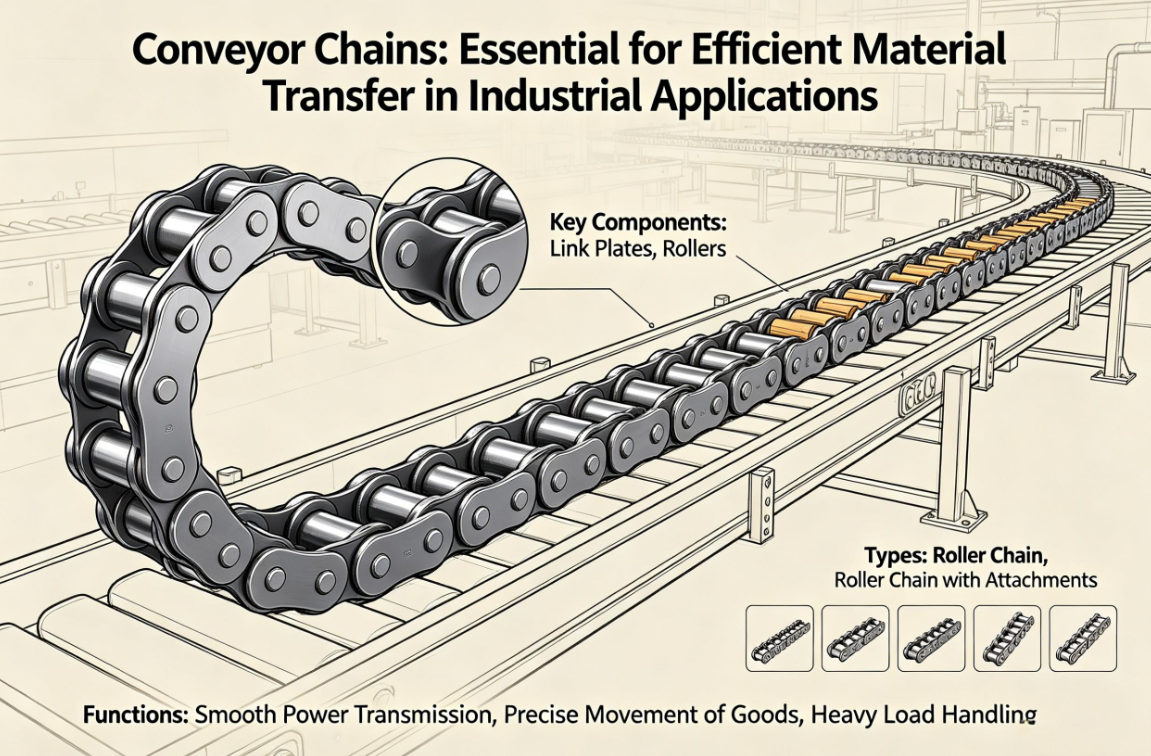
A conveyor chain connects moving parts within a conveyor system and transports materials from one point to another. Depending on the application, the chain may carry products directly or work together with attachments, slats, buckets, or rollers.
Typical functions include:
Conveyor chains are often selected based on load capacity, speed, operating environment, and conveyor layout.
A conveyor chain is assembled from several precision-engineered components that work together under constant load and movement.
The link plates form the structural body of the chain. They connect adjacent chain parts and absorb the tensile force generated during operation.
Key characteristics of link plates include:
The thickness and material of the link plates directly affect the chain’s durability and load capacity.
Pins connect the chain links and act as pivot points during chain movement. Hardened steel pins are commonly used to improve wear life.
Bushings reduce friction between pins and rollers while helping the chain maintain smooth movement.
Many conveyor systems use roller chains, which include rollers mounted over bushings. The rollers reduce friction between the chain and conveyor tracks or sprockets.
Advantages of roller chains include:
Roller chains are commonly found in packaging machinery, industrial automation, and material handling systems.
Some conveyor chains include special attachments for carrying products, lifting materials, or securing loads during transport.
Different industries require different conveyor chain designs.
This is the most widely used conveyor chain type. It combines durability with efficient power transmission and is suitable for general conveying applications.
Double pitch chains have longer link spacing, making them lighter and more economical for long conveying distances with moderate loads.
These chains allow accessories or attachments to be inserted directly into the hollow pins for flexible conveying system design.
Designed for food processing, pharmaceutical, and corrosive environments where rust resistance is required.
Built for mining, cement, steel, and other demanding industrial applications involving high loads and abrasive conditions.
A conveyor chain operates through engagement with sprockets. As the drive sprocket rotates, the chain moves along the conveyor track while carrying materials or products.
The chain continuously cycles through:
Proper lubrication, alignment, and tension are important for smooth operation and long service life.
Manufacturers select materials based on application requirements.
Common materials include:
Heat treatment processes are often applied to pins, bushings, and link plates to improve hardness and wear resistance.
Conveyor chains are used across many industrial sectors.
Assembly lines rely on conveyor chains for continuous product movement and automation.
Stainless steel conveyor chains are commonly used in hygienic environments.
Heavy-duty chains transport abrasive bulk materials under harsh operating conditions.
High-speed conveyor systems use roller chains for smooth and accurate product transfer.
Conveyor chains are used in grain handling equipment, harvesters, and feed systems.
Conveyor chains remain widely used because they offer several practical benefits.
They can transport heavy materials over long operating periods.
Properly manufactured chains provide reliable operation under continuous use.
Different chain configurations are available for various industries and conveying conditions.
Well-designed roller chains reduce vibration and improve conveying smoothness.
Individual chain components can often be replaced without changing the entire system.
Like all mechanical components, conveyor chains can experience wear over time.
Typical issues include:
Routine inspection and preventive maintenance help reduce downtime and extend chain life.
When selecting a conveyor chain, several factors should be evaluated.
Determine the working load and peak load conditions.
Higher speeds may require precision roller chains with improved wear resistance.
Consider temperature, moisture, dust, chemicals, or corrosion exposure.
Choose materials compatible with the application environment.
Some applications require low-maintenance or self-lubricating chain designs.
Working with an experienced conveyor chain manufacturer can help ensure proper chain selection.
Regular maintenance improves chain performance and operating life.
Recommended practices include:
Preventive maintenance reduces unexpected equipment failure and production downtime.
Modern conveyor chain manufacturing continues to improve through:
Conveyor chains are designed primarily for material transport, while roller chains are commonly used for power transmission. However, many conveyor systems also use roller chain designs to reduce friction and improve movement efficiency.
Link plates support the tensile load of the chain and maintain structural strength during operation. Their material quality and manufacturing precision directly affect chain durability.
Common materials include carbon steel, alloy steel, and stainless steel. Material selection depends on load, environment, and corrosion resistance requirements.
The service life depends on load conditions, lubrication, operating environment, maintenance, and chain quality. Proper maintenance can significantly extend chain lifespan.
Signs include excessive elongation, cracked link plates, worn rollers, stiff movement, increased noise, or poor sprocket engagement.
Stainless steel conveyor chains provide better corrosion resistance and are suitable for food processing, pharmaceutical, and wet environments. However, carbon steel chains may offer higher strength in some heavy-duty applications.


