
Industrial chains are essential components in power transmission and material handling equipment. They transfer motion, support loads, and keep production systems operating efficiently across industries such as manufacturing, agriculture, mining, logistics, food processing, and construction.
Choosing the right chain is not simply a matter of selecting the correct size. Load capacity, operating environment, speed, lubrication, and material all influence chain performance and service life. A chain that performs well in a clean production line may not be suitable for abrasive mining conditions or wet processing environments.
This guide explains the most common chain types, how to evaluate your operating conditions, and how to select a chain that delivers dependable performance over the long term.
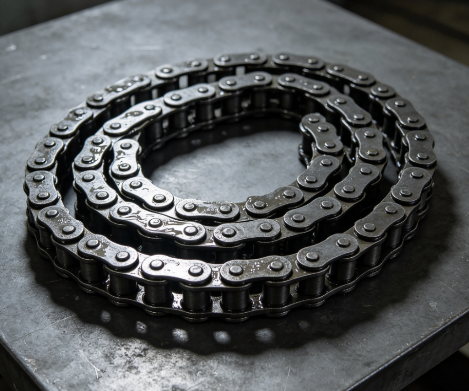
Every industrial application places different demands on a chain.
Some systems operate continuously at high speeds, while others move slowly under heavy loads. Certain environments expose chains to moisture, chemicals, dust, or extreme temperatures. These factors affect wear, corrosion, lubrication, and maintenance requirements.
Selecting an appropriate type of chain helps improve equipment reliability, reduce unexpected downtime, and lower replacement costs throughout the life of the machine.
There are many chain types used in industrial equipment. Each design is intended for specific applications.
Roller chains are among the most widely used industrial chains. They transmit mechanical power between sprockets with high efficiency and are available in numerous sizes based on industry standard dimensions.
Common applications include:
Roller chains are suitable for both light-duty and medium-duty power transmission applications and can also be designed for demanding operating conditions.
Conveyor chains are designed to transport products or materials rather than transmit rotational power.
They are commonly used in:
Different conveyor systems require different chain configurations depending on product weight and conveying method.
Engineering chains are manufactured for demanding industrial environments.
Typical applications include:
These duty chains are designed to withstand continuous operation and high impact loads.
Leaf chains are commonly used in lifting equipment.
Applications include:
Their multiple-layer plate construction provides excellent tensile strength for lifting applications.
Material selection directly affects chain performance and maintenance requirements.
Carbon steel remains the most widely used material for industrial chains because it provides an excellent balance between strength, durability, and cost.
Advantages include:
Carbon steel chains are commonly used in manufacturing, agriculture, logistics, and heavy equipment.
Stainless steel chains are designed for environments where corrosion resistance is a priority.
They are commonly used in:
Benefits include:
Although stainless steel chains generally have lower tensile strength than some alloy steel chains, they perform exceptionally well in environments where moisture or chemicals are present.
Choosing the right chain requires evaluating several operating conditions.
The first consideration is the working load.
Applications involving heavy loads require chains with sufficient tensile strength and fatigue resistance.
Always include an appropriate safety factor when selecting chain size.
High-speed applications require chains with accurate manufacturing tolerances and proper lubrication.
Lower-speed systems carrying heavy products often require larger chain sizes instead.
Environmental conditions influence both material selection and maintenance intervals.
Consider:
Wet or corrosive environments often benefit from stainless steel chains, while dry industrial applications commonly use carbon steel.
Proper lubrication reduces friction and wear.
Some applications permit regular lubrication, while others require maintenance-free or self-lubricating chain designs.
Chains and sprockets should be matched according to industry standard specifications.
Incorrect sprocket dimensions accelerate wear and reduce service life.
Proper chain length ensures smooth operation while maintaining correct tension.
Chains that are excessively tight or loose experience unnecessary wear.
Equipment operating under heavy duty conditions requires chains designed for demanding workloads.
Typical heavy-duty industries include:
These applications often use reinforced duty chains manufactured from heat-treated alloy or carbon steel.
When selecting chains for heavy-duty equipment, engineers typically evaluate:
Proper installation and regular maintenance help maximize chain life under continuous operation.
Industrial chains are available for a wide range of applications.
Examples include:
| Industry | Recommended Chains |
|---|---|
| Manufacturing | Roller Chains |
| Agriculture | Roller Chains, Conveyor Chains |
| Mining | Heavy Duty Chains |
| Construction | Engineering Chains |
| Warehousing | Conveyor Chains |
| Food Processing | Stainless Steel Chains |
| Marine | Stainless Steel Chains |
| Packaging | Roller Chains |
Manufacturers often supply multiple chains including conveyor chains, engineering chains, attachment chains, leaf chains, and custom-designed solutions for specialized equipment.
Selecting the right chain supplier is just as important as selecting the chain itself.
A dependable supplier should offer:
Experienced suppliers can also recommend suitable chain materials and sizes based on operating conditions, helping customers avoid premature wear and unnecessary maintenance.
Routine maintenance extends chain service life and helps maintain consistent performance.
Recommended practices include:
Preventive maintenance is generally more economical than repairing equipment after chain failure.
Roller chains are the most commonly used industrial chains because they provide efficient power transmission and are available in standardized sizes for a wide range of machinery.
Stainless steel chains are recommended for environments exposed to moisture, chemicals, or frequent washdowns, including food processing, marine equipment, and pharmaceutical manufacturing.
In many applications, carbon steel chains provide higher tensile strength and better wear resistance than standard stainless steel chains. However, stainless steel offers superior corrosion resistance.
For heavy duty applications, consider load capacity, operating speed, impact loading, environmental conditions, lubrication, and compatibility with existing sprockets.
Choose a chain supplier with proven manufacturing experience, quality control procedures, technical support, and the ability to supply products that meet recognized industry standard specifications.
Service life depends on operating conditions, lubrication, load, maintenance, and material selection. With proper installation and maintenance, industrial chains can provide reliable performance over the long term.
Selecting the right industrial chain begins with understanding the operating environment and the demands of the application. Load capacity, speed, lubrication, environmental conditions, and material all influence chain performance.
For general industrial applications, carbon steel chains offer excellent strength and durability. Where moisture, chemicals, or regular washdowns are present, stainless steel chains provide better corrosion resistance. Equipment operating under heavy duty conditions often requires reinforced duty chains designed for demanding workloads.
Working with an experienced chain supplier and selecting the appropriate type of chain for the application helps improve equipment reliability, reduce maintenance, and achieve dependable performance over the long term.


