
Mechanical equipment depends on reliable power transmission to keep machines operating efficiently. Whether the application involves manufacturing, agriculture, mining, food processing, or material handling, selecting the right type of drive directly affects efficiency, maintenance, and operating costs.
Among the most widely used solutions are chain drive systems and belt drive systems. Both are designed to transfer power between rotating shafts, but they differ in construction, operating principles, and suitable applications.
This guide compares chain drives and belt drives, explains their advantages and limitations, and helps you determine which option best matches your equipment and operating conditions.
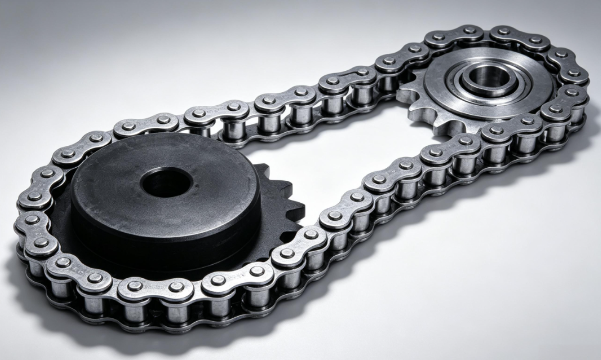
A chain drive is a mechanical power transmission system that uses a chain and sprockets to transmit power between shafts.
Unlike belt drives, chain drives use positive engagement between the chain and sprocket teeth, eliminating slippage under normal operating conditions.
The most common industrial chain used for power transmission is the roller chain.
A typical chain drive includes:
Chain drive systems are widely used in:
A belt drive uses flexible belts running over pulleys to transfer rotational motion between shafts.
Different belt designs are available depending on torque requirements, shaft spacing, and positioning accuracy.
Modern belts and pulleys are used across thousands of industrial applications because they are quiet, lightweight, and easy to maintain.
Several types of industrial belts are available for different applications.
V-belts are commonly used for general industrial machinery.
Advantages include:
Timing belts contain molded teeth that engage matching pulley grooves.
Unlike standard V-belts, timing belts prevent slipping and maintain precise shaft synchronization.
Typical applications include:
Synchronous belts operate similarly to timing belts and provide positive engagement with pulley teeth.
They are often selected when precise positioning or accurate timing is required.
Toothed belts combine flexible construction with positive engagement.
They offer:
A conveyor belt is primarily used for material handling rather than mechanical power transmission.
Common industries include:
| Feature | Chain Drive | Belt Drive |
|---|---|---|
| Power Transmission | Positive engagement | Friction or toothed engagement |
| Slippage | No | Possible (except timing belts) |
| Maintenance | Regular lubrication | Minimal lubrication |
| Noise | Higher | Lower |
| Heavy Load Capacity | Excellent | Moderate |
| Long Distance Transmission | Limited | Better for long distance shaft spacing |
| Cost | Moderate | Lower initial cost |
| Speed Ratio | Constant | May vary with belt slip |
Both systems transfer power, but each is designed for different operating requirements.
When machines require an exact speed ratio, chain drives and timing belts are generally preferred.
A roller chain provides direct engagement with sprockets, ensuring accurate motion without slipping.
Similarly, timing belts, toothed belts, and synchronous belts maintain synchronization between shafts because their teeth mesh with matching pulleys.
Conventional V-belts, however, may experience slight slip under varying loads.
One advantage of belt drives is their ability to transfer power across relatively long distance shaft centers.
Chain drives are generally more suitable when shafts are positioned closer together.
Machines carrying heavy loads typically benefit from chain drive systems.
Industrial roller chains handle shock loading and continuous operation more effectively than most belt systems.
Heavy-duty applications include:
Belt drives usually operate more quietly because flexible belts absorb vibration.
Chain drives generate more mechanical noise due to metal-to-metal contact.
Where low noise is important, belt drives are often selected.
Chain drives require routine maintenance, including:
Belt drives generally require:
Although belts require less maintenance, they eventually wear and must be replaced.
Expected service life depends on:
Proper maintenance can significantly extend the service life of both chains and belts.
Selecting the correct type of drive depends on the application.
Choose a chain drive when you need:
Choose a belt drive when you need:
| Application | Recommended Drive |
| Mining Equipment | Chain Drive |
| Agricultural Machinery | Chain Drive |
| Motorcycles | Chain Drive |
| Packaging Machines | Timing Belt |
| CNC Equipment | Synchronous Belt |
| Printing Machinery | Timing Belt |
| HVAC Systems | V-Belt |
| Material Conveying | Conveyor Belt |
| Food Processing | Timing Belt or Conveyor Belt |
Application requirements should always take precedence over general recommendations.
Yes.
Many production lines use both technologies side by side.
For example:
Each drive system performs the task it is best suited for within the same manufacturing process.
Before choosing between chain and belt drives, evaluate:
Carefully reviewing these factors helps identify the most suitable power transmission system for the application.
Neither is universally better.
Chain drives are generally preferred for heavy loads and accurate power transmission, while belt drives offer quieter operation and lower maintenance for many industrial applications.
A roller chain uses metal links and sprockets, while timing belts use reinforced rubber belts with molded teeth.
Both provide positive engagement without slipping under normal operating conditions.
In many industrial applications, synchronous belts and timing belts refer to the same general belt design that uses teeth to maintain shaft synchronization.
The service life depends on load, lubrication, installation quality, and maintenance.
Properly maintained chain drives often achieve a long service life in demanding environments, while timing belts can also provide excellent durability under suitable operating conditions.
Yes.
Compared with chain drives, belt drives are generally more suitable for transmitting power over long distance shaft centers.
Belt drive systems usually require less routine maintenance because they do not need regular lubrication.
Chain drive systems require periodic lubrication and inspection to maintain reliable performance.
Both chain drives and belt drives are widely used in industrial equipment because they provide efficient power transfer under different operating requirements.
A roller chain offers accurate power transmission, excellent durability, and dependable performance under heavy loads. Belt drives—including timing belts, toothed belts, and synchronous belts—provide quiet operation, lower maintenance, and greater flexibility when shafts are spaced farther apart.
The best choice depends on load requirements, installation space, shaft distance, maintenance expectations, and overall operating conditions. Evaluating these factors before selecting a power transmission system helps improve equipment reliability, operating efficiency, and long-term performance.


