
Engineering chains are heavy-duty industrial chains designed to handle demanding applications involving high loads, shock forces, abrasive environments, and continuous operation. Unlike standard roller chains used for power transmission, engineering chains are typically built for conveying, lifting, dragging, elevating, and material handling tasks in harsh industrial conditions.
You can find engineering chains in industries such as mining, cement production, forestry, agriculture, sugar processing, wastewater treatment, steel manufacturing, and bulk material handling.
This guide explains what engineering chains are, how they work, the different types available, their advantages, applications, and how to choose the right chain for your operation.
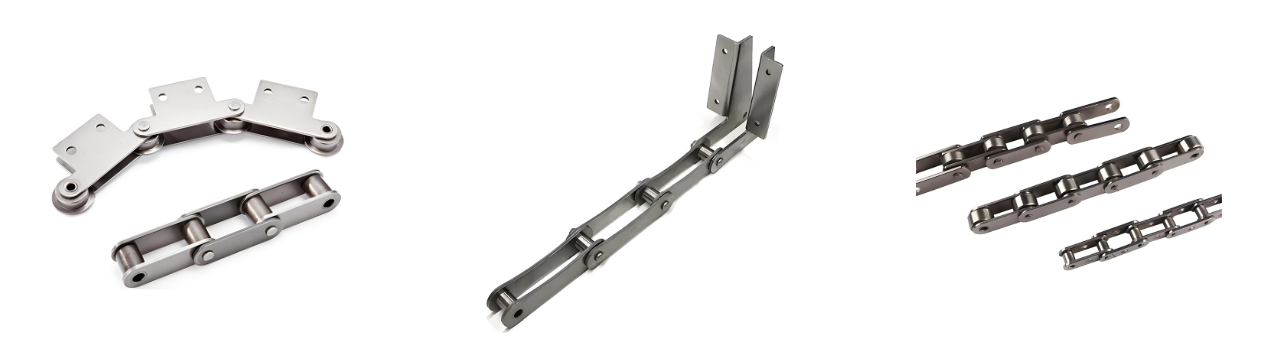
An engineering chain is a robust chain specifically designed for industrial conveying and material handling applications. These chains are manufactured with larger components, thicker sidebars, and stronger pins than standard roller chains, allowing them to withstand heavy loads and difficult working environments.
Engineering chains are commonly used when equipment operates under:
Many engineering chains are customized to fit specific machinery and operating requirements.
The term engineering class chains refers to a broad category of industrial chains designed for heavy-duty service beyond traditional power transmission applications.
Engineering class chains typically include:
These chains are engineered to provide durability and long service life in applications where ordinary chains may wear quickly or fail under load.
Engineering chains operate by transferring force through interconnected links and pins.
As the chain moves around sprockets:
Depending on the application, engineering chains may:
Their design allows them to perform reliably in environments where dust, moisture, heat, and debris are present.
Although designs vary, most engineering chains include several common components.
Sidebars form the primary structure of the chain.
They:
Pins connect chain links together and allow articulation around sprockets.
Proper pin design helps reduce wear and improve service life.
Many engineering chains use bushings to reduce friction between moving parts.
Bushings help:
Certain engineering class chains incorporate rollers to reduce friction when moving along tracks or conveyor surfaces.
Several types of engineering chains are commonly used throughout industry.
Welded steel chains are manufactured from welded steel components and offer excellent strength.
Applications include:
Advantages:
Steel pintle chains are designed with open-barrel construction that helps remove debris during operation.
Applications include:
Advantages:
Cast chains are produced from cast metal components.
Common applications include:
Advantages:
Combination chains combine cast links with steel pins.
Applications include:
Advantages:
Detachable chains feature simple link designs that allow quick assembly and disassembly.
Applications include:
Advantages:
Many buyers confuse engineering chains with roller chains, but they serve different purposes.
| Feature | Engineering Chains | Roller Chains |
|---|---|---|
| Main Function | Conveying & material handling | Power transmission |
| Operating Speed | Low to moderate | Moderate to high |
| Load Capacity | Very high | Moderate |
| Shock Resistance | Excellent | Moderate |
| Environmental Resistance | High | Moderate |
| Custom Attachments | Common | Limited |
| Typical Industries | Mining, cement, forestry | Manufacturing, machinery |
Engineering chains are generally selected when durability and load-carrying capability are more important than high-speed operation.
Engineering class chains are designed to handle substantial loads over extended periods.
This makes them suitable for:
Many engineering chains operate successfully in environments that include:
Their rugged construction helps extend service life.
Manufacturers often offer engineering chains with:
These options allow the chain to meet unique application requirements.
Heavy machinery often produces sudden shock loads.
Engineering class chains are designed to absorb these forces without excessive wear or deformation.
Engineering chains are used across a wide range of industries.
Mining operations rely on engineering chains for:
Engineering chains move:
Agricultural equipment commonly uses engineering chains for:
Chains transport logs, wood chips, lumber, and other forest products.
Steel pintle chains are frequently used in:
Engineering chains support heavy-duty conveying applications in steel mills and metal processing facilities.
Selecting the proper chain requires evaluating several operating conditions.
Determine:
The chain should provide sufficient strength with an appropriate safety factor.
Consider exposure to:
Material selection directly affects service life.
The chain must match:
Proper compatibility helps prevent premature wear.
Some engineering class chains are designed for minimal maintenance, while others require regular lubrication and inspection.
Choosing the right design can reduce downtime and operating costs.
Proper maintenance helps maximize chain performance.
Recommended practices include:
Preventive maintenance often extends service life and improves system reliability.
An engineering chain is a heavy-duty industrial chain designed for conveying, lifting, dragging, and material handling applications that involve high loads and demanding operating conditions.
Engineering class chains are industrial chains specifically designed for heavy-duty service, including welded steel chains, cast chains, steel pintle chains, drag chains, and conveyor chains.
Engineering chains are primarily used for conveying and material handling, while roller chains are typically used for power transmission between rotating shafts.
Engineering chains are widely used in mining, cement plants, agriculture, forestry, wastewater treatment, steel manufacturing, and bulk material handling facilities.
Most engineering chains are manufactured from carbon steel, alloy steel, cast steel, or specialized materials designed to improve wear and corrosion resistance.
Service life depends on load conditions, maintenance practices, operating environment, and chain quality. Proper maintenance can significantly extend operating life.
Yes. Many engineering chains can be supplied with attachments, scrapers, flights, special coatings, and custom dimensions to suit specific equipment requirements.
Factors such as load capacity, operating environment, conveyor design, maintenance requirements, and sprocket compatibility should be evaluated when selecting an engineering chain.
Engineering chains are built for demanding industrial environments where strength, durability, and reliable performance are required. From mining and cement production to agriculture and wastewater treatment, these chains support a wide range of material handling and conveying operations.
Understanding the different types of engineering class chains, their applications, and their design characteristics helps engineers and maintenance teams select solutions that deliver long-term performance while reducing downtime and operating costs.


