
Chains are among the most widely used mechanical components in industrial equipment. They are designed to transfer force, move products, and connect machinery components in a reliable and efficient manner. While roller chains and conveyor chains may appear similar at first glance, they are engineered for different purposes and operating conditions.
A roller chain is primarily used for power transmission, transferring rotational force between sprockets. A conveyor chain, on the other hand, is designed to move materials, products, or components along a production line.
Understanding the differences between these two chain types helps equipment designers, maintenance teams, and purchasing managers select the most suitable chain for their applications.
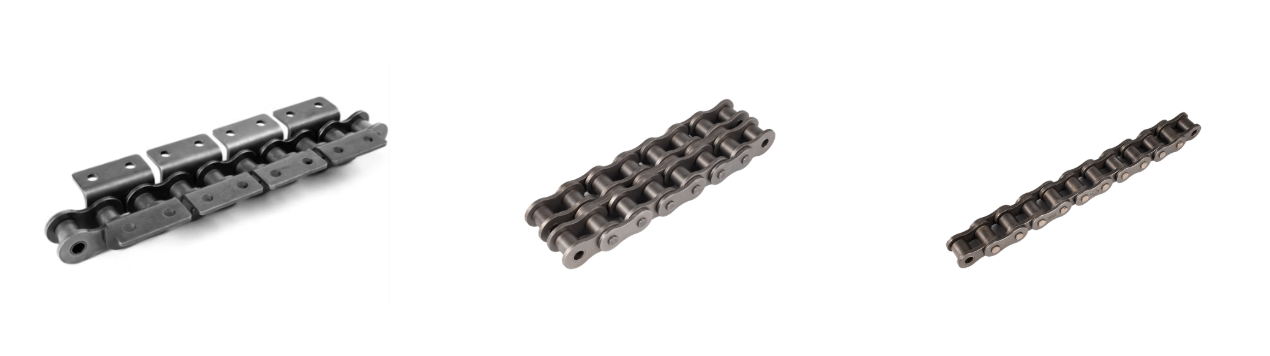
A roller chain is a mechanical chain used to transmit power from one shaft to another through sprockets.
It consists of a series of interconnected components including:
As the sprocket rotates, the rollers engage with the sprocket teeth, allowing smooth and efficient power transmission.
Roller chains are commonly found in:
Because of their efficiency and reliability, roller chains remain one of the most widely used methods of mechanical power transmission.
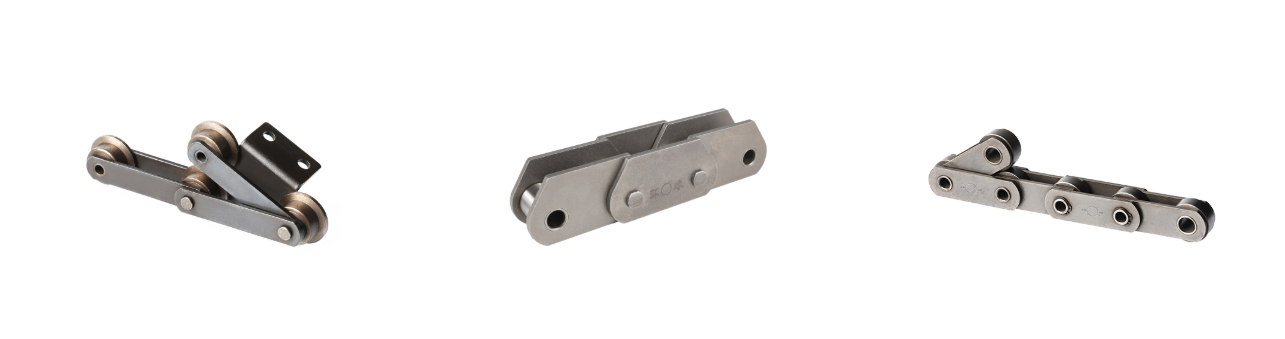
A conveyor chain is designed specifically for conveying materials rather than transmitting rotational power.
These chains move products through production and handling systems, often under heavy loads and challenging environmental conditions.
Conveyor chains are commonly used in:
Unlike roller chains, conveyor chains are often customized to accommodate specific loads, attachments, and transport requirements.
A standard roller chain consists of several key components.
Link plates form the primary structural framework of the chain.
Their functions include:
The strength of the link plates largely determines the chain's overall load capacity.
Rollers reduce friction between the chain and sprocket.
Benefits include:
Pins and bushings form the chain joints.
They allow articulation as the chain moves around sprockets while transmitting force through the chain assembly.
A connecting link allows chain installation and removal.
This detachable section connects two chain ends and simplifies maintenance procedures.
Conveyor chains share some components with roller chains but are optimized for material handling rather than power transmission.
Typical conveyor chain components include:
Many conveyor chains include special attachments that carry products directly or connect to conveying equipment.
These additional features are rarely found on standard roller chains.
The most significant difference lies in their intended function.
A roller chain is designed for power transmission between rotating shafts.
Its objectives include:
Applications typically involve continuous rotational movement.
A conveyor chain is designed to move materials from one location to another.
Its objectives include:
The focus is on transportation rather than rotational power transfer.
Roller chains primarily experience:
The chain is constantly subjected to forces generated by sprocket engagement and transmitted power.
Conveyor chains often experience:
Because they support transported materials directly, conveyor chains are often designed with larger components and heavier construction.
Roller chains generally operate at much higher speeds than conveyor chains.
Many roller chain systems operate at:
Smooth engagement with sprockets is essential for efficient power transmission.
Conveyor systems usually operate at:
The goal is safe and reliable product movement rather than maximum rotational efficiency.
Roller chain design emphasizes:
Standardized chains are available under international standards such as ANSI and ISO.
Conveyor chains are often application-specific.
Design considerations include:
As a result, conveyor chains are available in many customized configurations.
Roller chains require:
Lubrication is especially important because friction occurs between pins and bushings during operation.
Conveyor chain maintenance often focuses on:
Operating environments may expose conveyor chains to dust, moisture, chemicals, or abrasive materials.
Industries that frequently use roller chains include:
In these applications, efficient power transmission is the primary objective.
Conveyor chains are widely used in:
In these environments, moving products through a production line is the primary task.
| Feature | Roller Chain | Conveyor Chain |
|---|---|---|
| Primary Function | Power transmission | Material transport |
| Typical Speed | Medium to high | Low to moderate |
| Sprocket Engagement | Essential | May vary |
| Standardization | Highly standardized | Often customized |
| Load Type | Torque transmission | Product carrying |
| Attachments | Rare | Common |
| Application | Mechanical drives | Conveyor systems |
| Maintenance Focus | Lubrication and wear | Wear and attachments |
| Operating Environment | Machinery drives | Production lines and material handling |
Choose a roller chain when:
Choose a conveyor chain when:
The intended application should always guide chain selection.
A roller chain is designed for power transmission between rotating shafts, while a conveyor chain is designed to move products and materials through conveyor systems.
Link plates form the structural framework of a chain and carry the tensile forces generated during operation.
A connecting link is a detachable chain component used to join two chain ends, allowing easier installation and maintenance.
In some light-duty applications, a roller chain may be used in a conveyor system. However, dedicated conveyor chains are generally preferred for material handling tasks.
Roller chains offer high efficiency, reliable torque transfer, long service life, and compatibility with standardized sprockets.
Conveyor chains are commonly used in food processing, mining, automotive manufacturing, warehousing, logistics, and material handling operations.
Many conveyor chains are designed to carry heavier loads because they support transported materials directly. Actual load capacity depends on chain design and specifications.
Maintenance intervals depend on operating conditions, load levels, speed, and environmental factors. Regular inspection and lubrication help maximize service life.
Some conveyor chains follow industry standards, but many are customized for specific equipment and conveying requirements.
Chain wear is commonly caused by inadequate lubrication, contamination, excessive loads, misalignment, and normal operational fatigue.
Although roller chains and conveyor chains share some structural similarities, they are designed for different purposes. Roller chains excel at power transmission, delivering efficient motion and torque transfer between rotating shafts. Conveyor chains are engineered for transporting products and materials through industrial processes and production lines.
Understanding differences in design, load handling, speed capability, link plates, and connecting link configurations helps engineers and maintenance teams choose the right chain for long-term performance and reliability. Selecting the appropriate chain type not only improves equipment efficiency but also reduces maintenance costs and downtime.


