
Coal-fired power plants rely on continuous, reliable fuel flow. Before coal reaches mills or boilers, it must be stored, extracted, metered, and conveyed. One of the most critical components enabling this process is the industrial feeder chain—a heavy-duty evolution of the classic roller chain designed for extreme environments.
This article explains how feeder chains work, why standard roller chains are not sufficient, and how engineers select the right chain for coal handling applications.
Coal is a challenging bulk material:
A feeder failure can stop the entire plant. Because of this, coal feeders use engineering steel chains specifically designed for:
These chains are often referred to as:
They are derived from roller chain principles, but heavily reinforced.
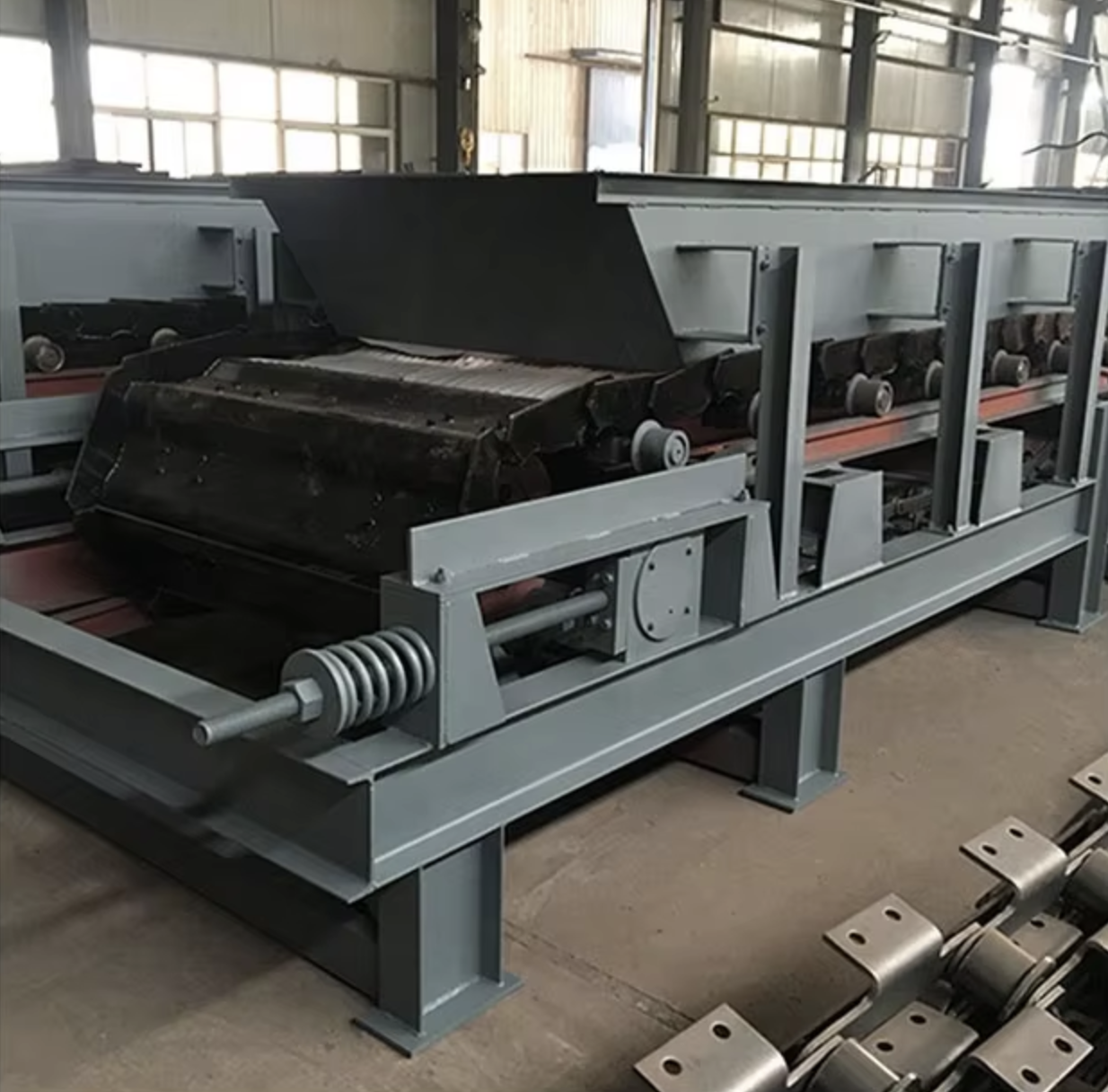
Used to extract coal from bunkers or silos.
How they work
Flights (scrapers) attached to the chain drag coal through a trough toward discharge points.
Chain characteristics
These are the most common chain-driven feeders in coal plants.
Used for very heavy or large lump coal.
How they work
Steel pans mounted on chains move coal like a tank track.
Chain characteristics
Apron feeder chains are among the strongest conveyor chains used in industry.
Used for controlled metering of coal before crushers or mills.
Chain characteristics
| Feature | Standard Roller Chain | Coal Feeder Chain |
|---|---|---|
| Application | Power transmission | Bulk material conveying |
| Chain plates | Thin | Extra-thick heat-treated steel |
| Pin diameter | Standard | Oversized for shock loads |
| Lubrication | Oil/grease required | Often self-lubricating or dry |
| Operating speed | Medium–high | Slow, high torque |
| Environment | Clean | Dust, abrasion, moisture |
In short: Feeder chains are engineered roller chains designed for conveying, not just power transmission.
Coal dust acts like sandpaper. Chains must use:
Coal lumps falling into feeders create sudden impact loads.
Design solutions:
Coal contains sulfur and moisture.
Common solutions:
Chain stretch affects feeder accuracy and causes misalignment.
Solutions:
Using properly engineered chains provides:
For power plants operating continuously, reliability is far more important than initial chain cost.
To maximize chain life:
Most coal feeders use engineering steel roller chains, drag conveyor chains, or apron feeder chains depending on the feeder type.
No. They are based on roller chain design but reinforced for slow speed, heavy load, and abrasive environments.
Typically 2–6 years, depending on:
Elongation is caused by pin and bushing wear, not actual stretching of metal.
Generally not recommended. Standard chains cannot handle:
The most common causes are:
Coal feeder chains are not ordinary roller chains. They are heavy-duty engineering conveyor chains designed to operate in one of the most demanding industrial environments.
Selecting the right chain—combined with proper maintenance—directly impacts:
For coal handling systems, the feeder chain is a small component with a huge operational impact.


